Tegobessus of
Abonigenâ and U̯ailogenos
In Modern Gaulish Polytheism, the customs differ person to person/house to house. This custom is called Tegobessus (house custom).
For our house (name TBD), these are the beliefs, ethics, virtues, and customs we live by.
Trirextoues/The Three Laws
- Dugie Dêuûs- “Honor the Gods”
- Gneie ne drucon- “Do no Evil”
- Delge āxtam- “Hold your behavior”
Nauan Nertoi/The Nine Virtues
- Eriðða- Piety
- Carantiā- Friendship
- Oigetocariā- Hospitality
- Catarniā- Bravery
- Galā- Courage
- Lugiā- Resourcefullness
- Sucariā- Politeness
- Anlabariā- No Gossip
- Couīriextiā- Relevant Speech
Source: https://gaulishpolytheism.com/galatis-litauias-virtues/
Sacred Days/Times (Îu̯oi)
I. Gi̯amos
1. Samoni̯ā
•equivalent of Samhain
•Samonis/November 1st through 3rd
2. Lati̯on Druu̯idalous
•Mistletoe (Druu̯idalus) Day (the day
the historical Druids collected
mistletoe)
•five days after the new moon of
Samonis/November
3. Eponāli̯ā
•Festival of Eponā
•Dubnos/December 18th
4. Sāu̯elositon Gi̯ami
•Winter Solstice
•Dubnos/December 21st or 22nd
5. Pennoblednī Lāmonammēs
•Handfasting Anniversary
•Dubnos/December 21st
6. Ambiu̯olci̯ā
•equivalent of Imbolc
•Ambiu̯olcos/February 1st
7. Mīðð Senoscetli Āferamerīcātēs
•Black (literally “African-American”)
•History Month
•Ambiu̯olcos/February
8. Comi̯ānonoχ U̯esrāci
•Spring Equinox
•Litau̯imīðð/March 20th or 21st
9. Mīðð Regeni Albamerīcātēs
•Scottish-American Heritage Month
•Coimocani̯os/April
10. Commenu̯an Catous Cūlolindi
•Commemoration of the Battle of
Culloden
•Coimocani̯os/April 16th
II. Samos
11. Beloteni̯ā
•equivalent of Bealtaine
•Belotenos/May 1st
12. Sāu̯elositon Sami
•Summer Solstice
•Medi̯orosamos/June 20th, 21st, or 22nd
13. Lugosamonis
• equivalent of Lughnasadh
• Lugusamonis/August 1st
14. Commenu̯an Cammani Dacrui̯on
• Commemoration of the Trail of Tears
• Medi̯ou̯ogi̯amos/September 16th
15. Comi̯ānonoχ U̯ogi̯ami
• Autumn Equinox
• Medi̯ou̯ogi̯amos/September 22nd or
23rd
16. Commenu̯an Catous Alesi̯ās
• Commemoration of the Battle of
Alesia
• Caru̯ocantlos/October 4th
Our Dewoi/Spirits
- Briganti̯â- hearth goddess
- Artiū- Bear Mother/spiritual foster mother and Abonigenâ’s Matron
- Đîronâ- healing goddess and who brought us together
- Nantosu̯eltâ- home goddess
- Sucellos- All Father (An Dagda) Uailogenos’ work patron
- Ogmios- eloquence and writing and Uailogenos’ work patron
- Lugus- crafting, music, bardic arts
- Grannos- sun god and healing
- Rosmertâ- magic, divination, fate
- The Matronas- fate
- The Cailleach/Pali̯âcâ – Grandmother and creation goddess especially of the mountains
- Freya- Guardian of our cats and protector of our nephew
- Senisteroi- the ancestors (both chosen and relational)
- Cunouailos- guardian spirit
- Tegatîs- house spirit
- Land spirits
Common offerings and their associations
- Oats- a pantry staple that the Gauls and ancestors would have used and been familiar with
- Sweets- for the land spirits (fae)
- Butter- for Dewoi associated with cattle/our hearth goddess and for house spirit
- Milk- Dewoi associated with cattle
- Bread- house spirit
- Libations- used for special occasions and days of remembrance
- Incense- tradition
- Fire- tradition
Sacred Herbs and Stones
- Juniper-
- Mugwort-
- Amethyst-
- Tiger’s eye-
- Geodes-
Daily Hearth rite
Cleanse with water
Head – menti̯onos glanâs (clean thoughts)
Lips – u̯epoi glanoi (clean words)
Hands – aχtâs glanâs (clean deeds)
Light hearth candle
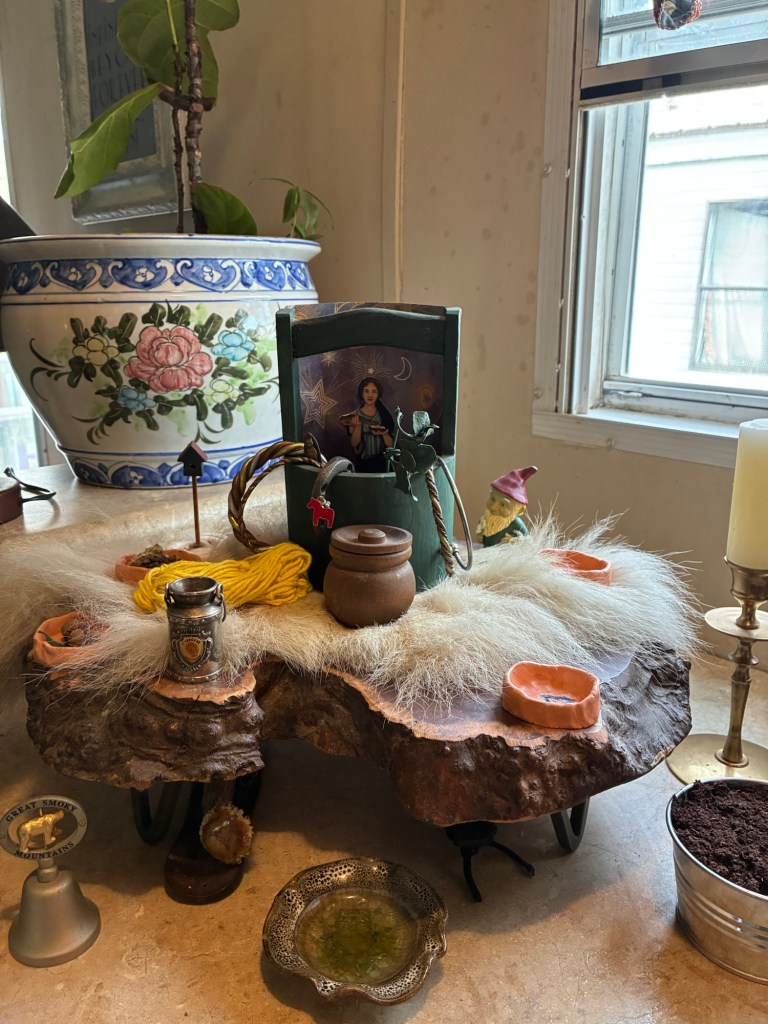
From this flame light tea light and incense, circle the altar sunwise three times with tea light
Ring bell
Say, “Dêu̯oi, Senisteroi, Asuro – bîete canti nos!” (Deities, Ancestors, Beneficial Spirits – be with us!)
Make offering and say, “Dati̯ete-su̯īs uta dassaomos. Dati̯omos-nīs uta dassaite.” (You [plural] give so that we give. We give so that You [plural] give.)
End the rite
Divination
- Rūnou̯elīti̯ā
- U̯āti̯āχtā Licācā/Fàidheachd Leacag (“Rūnogham”)
- Tarot
- Assorted Oracle decks

